The Breastfeeding Mini figure

"…the consequences of design practices and decisions shape
cultural norms that negatively impact breastfeeding practices and perpetuate health inequalities".
Sally Sutherland 2025, Doctoral Thesis.
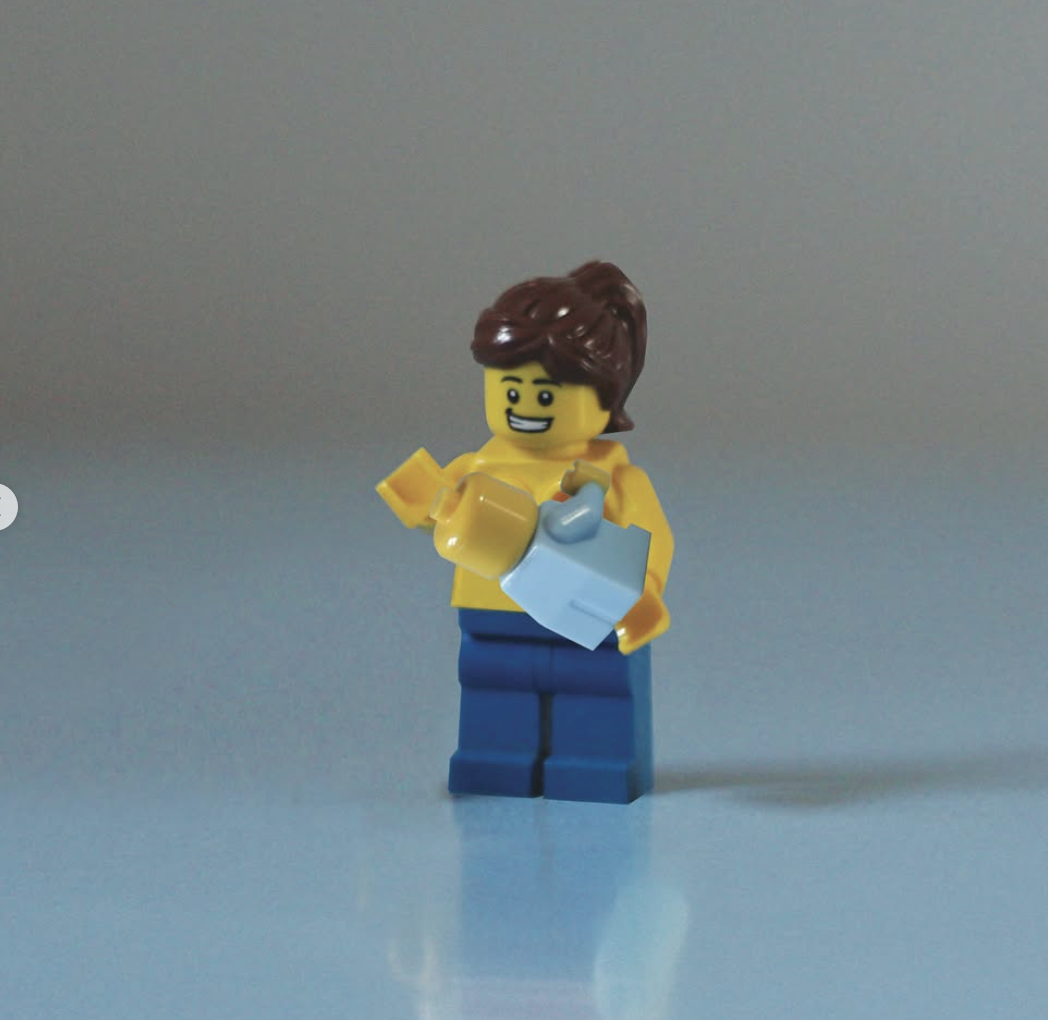
I use theory that shows that "we design our world, while our world acts back on us and designs us" (Annemarie Willis).
It is time to design things in a way that welcome all bodies and practices, and celebrates those that ultimately sustain and nurture life. Breastfeeding is not just a personal act; it’s a vital, life-giving practice shaped by our environments, our infrastructures, and our collective imaginations.
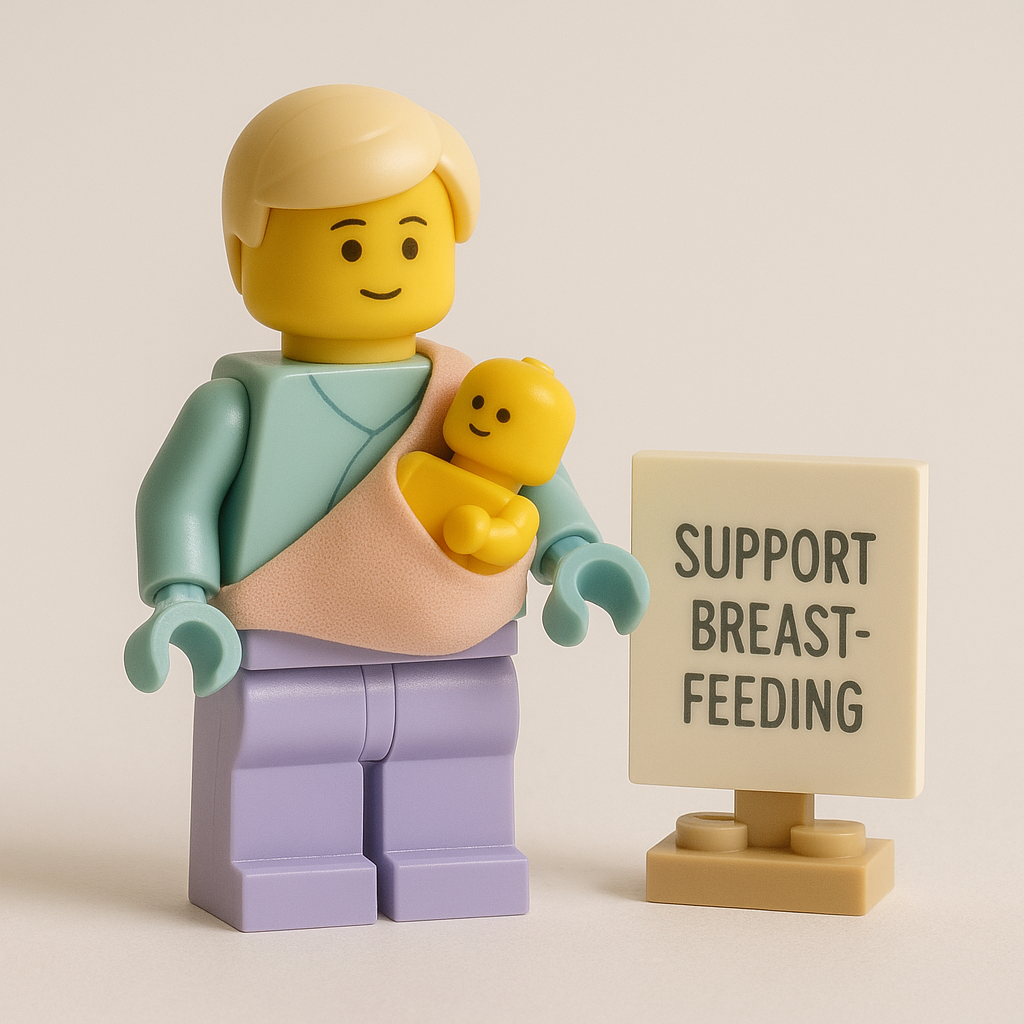
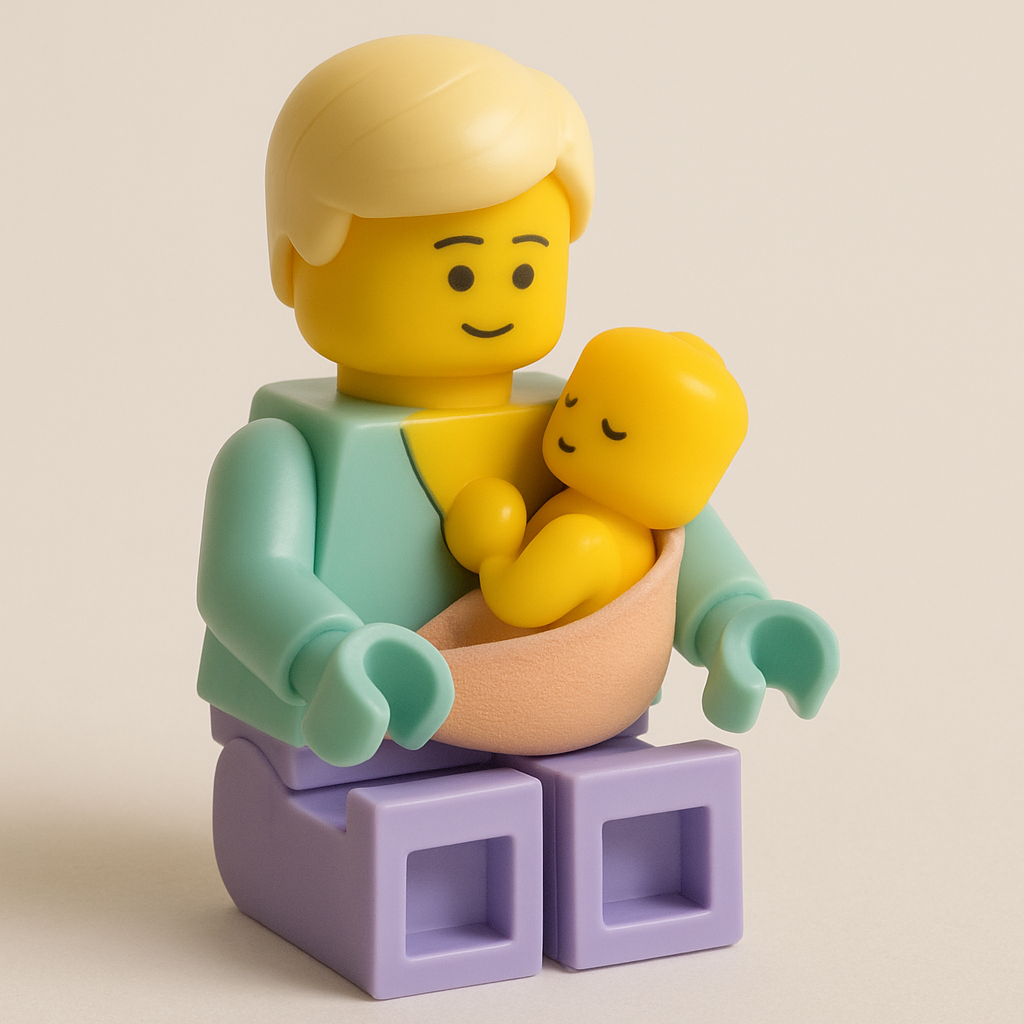
A breastfeeding minifigure might seem small, but representation matters. It’s a gesture towards recognising caregiving as central to our shared future, not marginal. Let’s design a world that reflects the realities of care, honours the labour of parents, and makes space, in play and beyond, for the practices that keep us alive.

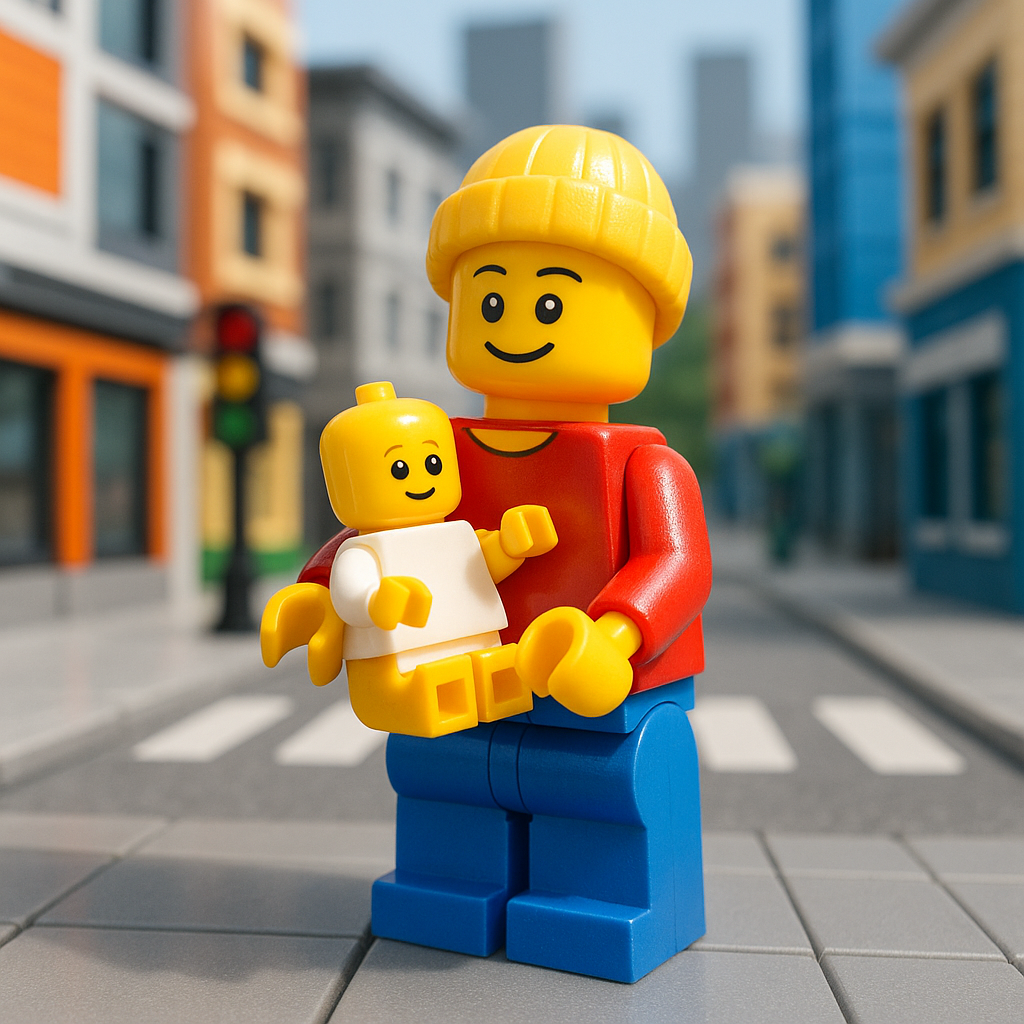
Censorship, Care, and the Digital Erasure of Breastfeeding
The practice of creating a breastfeeding (or chestfeeding) minifigure using AI visualisation tools has been both fascinating and revealing. In 2017, I created an image using basic Photoshop skills to try and fill a representational gap. In 2025, image-generating platforms offer far more sophisticated tools, but with troubling limitations. The terms "breastfeeding" and "chestfeeding" are still flagged as inappropriate or overly sexualised, often blocked or restricted by these platforms. More disturbingly, the depiction of a baby suckling, even discreetly, from a parent’s body is typically prohibited. Breasts and nipples, even in non-sexual, caregiving contexts, remain taboo. This is highly problematic. It reinforces harmful cultural narratives that sexualise feeding, and censor vital, everyday acts of care. If digital tools can’t represent one of the most basic and essential human practices, then we need to ask: who are these platforms really designed for, and what kinds of care are being excluded?
If a company like LEGO were to create a physical artefact that explicitly depicts a breastfeeding or chestfeeding minifigure, it could mark a significant shift in how such acts of care are recognised—especially in the postdigital age. The term postdigital refers to a world where digital technologies are no longer novel or separate from everyday life, but entangled with the physical, the social, and the cultural. In this context, what we design in the physical realm, especially mass-produced, culturally influential objects like LEGO, can loop back to reshape what is possible or permissible in digital spaces. A physical breastfeeding LEGO figure might not only challenge social taboos around public and queer-inclusive infant feeding, but could also prompt AI developers, tech platforms, and content filters to rethink the biases embedded in their systems. It would acknowledge care as not only visible but vital, deserving of representation across all media—physical, digital, and everything in between.