Designing design possibilities for UK public breastfeeding for maternal, infant and planetary health.
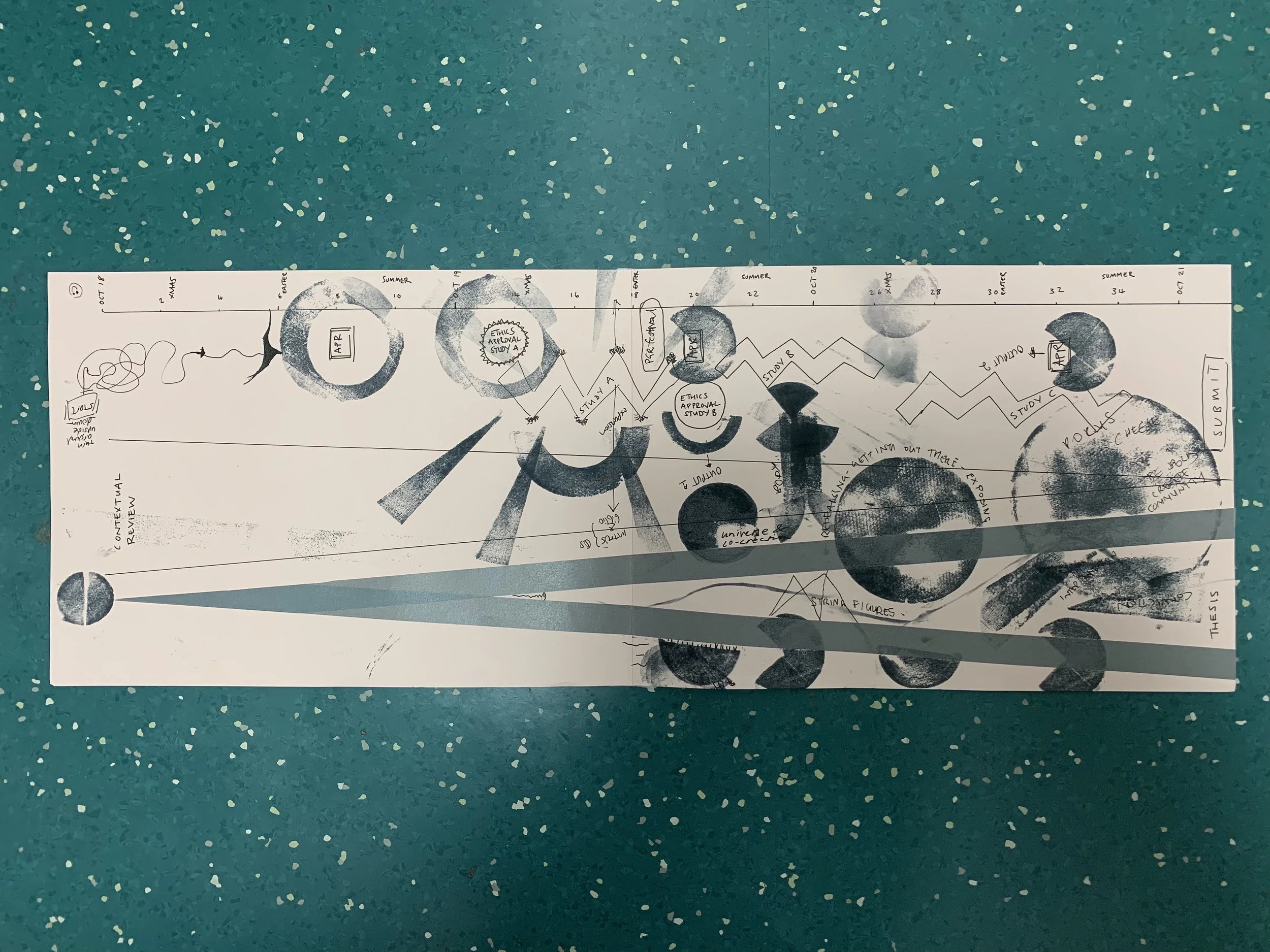
My AHRC-funded PhD (Design Star, 2019–2025) used a practice research in design approach. I was based at the University of Brighton, supervised by Dr Tom Ainsworth (Design), and Prof Nigel Sherriff (Public Health), with additional supervision from Prof Mathilda Tham (Design) at Goldsmiths, University of London. The project was part-time and developed over six years. It involved making, writing, drawing, recording, making small books, building a methodology, and testing ideas in public. The work was shaped by lived experience, critical theory, and a commitment to keeping design and care connected. It took place during, and was deeply influenced by, the COVID-19 pandemic.
Abstract
This research examines the intersection of design, health inequities, and public breastfeeding in the UK, revealing how design both perpetuates and challenges health inequalities. As a practice of world-making, design privileges and normalises certain infant feeding practices while marginalising and devaluing others. It reinforces the normativity of commercial infant formula while positioning breastfeeding as different or ‘other,’ shaping societal attitudes through cultural norms and physical environments. These exclusions reflect a broader pattern in design, where issues of reproduction and related health concerns remain structurally sidelined, treated as peripheral to design’s concerns.
Using a practice research in design approach, I engage with ontological design to demonstrate how contemporary design conventions marginalise breastfeeding in the public realm. My findings reveal that design practices influence public perceptions, categorising breastfeeding bodies as "other" and reinforcing biases towards autonomy, risk avoidance, and choice logic. These systemic biases obscure the complexities of caregiving and nurturing, perpetuating stereotypes and limiting health outcomes.
Through the lens of ontological design, I demonstrate how design contributes to health inequalities by limiting access to breastfeeding for marginalised groups—through spatial constraints, exclusionary policies, and cultural messaging that reinforce breastfeeding as out of place. The environmental impacts of CMF production further illustrate the global reach of design's influence on health inequalities, underscoring the need for more sustainable and equitable design interventions. However, by shifting design’s focus from choice and autonomy to care, relationality, and interdependence, I argue that design can also play a pivotal role in addressing these inequalities and fostering supportive environments for breastfeeding.
I emphasise the importance of positionality and reflexivity in design research, especially in addressing health inequalities. Drawing on personal experiences as a primary caregiver during the COVID-19 pandemic, I critique the barriers mothers and caregivers face within traditional research and design frameworks. This research calls for a feminist design approach that challenges conventional technological and profit-driven priorities, recognises the intersectional challenges of working-class women and mothers, and advocates for design methodologies foregrounding care, proximity, and radical openness.
Finally, I introduce the "Patchwork Design Methodological Assemblage" as a novel research methodology that weaves together diverse experiences and perspectives on public breastfeeding. Using metadesign and the metaphor of "seed bombing," I demonstrate how design can foster unexpected relationships, catalyse change, and extend its impact beyond academia into everyday applications. This work offers a manifesto for inclusive, radical design approaches, reshaping societal attitudes towards breastfeeding and advocating for systemic transformations.
“Sadly, design doesn’t just reflect society’s values—it rigs the game, privileging the few while quietly leaving others to struggle, like those who want to breastfeed, mothers, primary carers and children navigating spaces and systems never meant for them. While it may be uncomfortable and unintentional, many people, including children, mothers, and parents, are being betrayed and let down by the legacies of design decisions. This research underscores the urgency of reimagining design—not as a neutral tool but as a practice of care and world-making, shaping futures where justice and relationality guide its purpose.
Through the thesis and my research practices, I call loudly for a commitment to creating new design and design research approaches where reproduction, care and children are supported and valued, and where the relational aspects of breastfeeding are understood as integral to health equality. In doing so, I believe it is possible to move towards transformative justice that empowers future generations and redefines narratives of bodies, gender and breastfeeding. This vision is necessary for more just, sustainable, and equal futures.”
Sally Sutherland, 2025 PhD Thesis

The Covid Diaries.
The film "The Covid Diaries" tells the story of my roles as mother and academic during the pandemic. For more information on the film, and experiences as a mother - practice-based design doctoral researcher during the COVID-19 Pandemic please see my Open Access Article ‘Motherhood, COVID-19, and the postgraduate research experience: personal practice-based design insights’ in the Journal of Design for Health.