A Flag of Worlds Made Through Care
This flag is a way of sharing and holding the findings from my PhD research in a form that can move, travel, and be encountered outside of academic writing. Rather than sitting in a document, the ideas are made visible, physical, and collective.
Flags have played an ongoing role in my research. They kept reappearing as a form that could carry messages, gather people, and hold feeling as well as thought. They are not just objects but sites of encounter. They sit between protest, care, and everyday life. In my work, they became a way to bring together voices, experiences, and tensions that cannot easily be resolved, but need to be held.
This flag draws directly from the research findings. Each pairing is a way of naming what design does, and what it could do differently. It is not a set of answers, but a way of opening things up, making them visible, and insisting they are taken seriously.
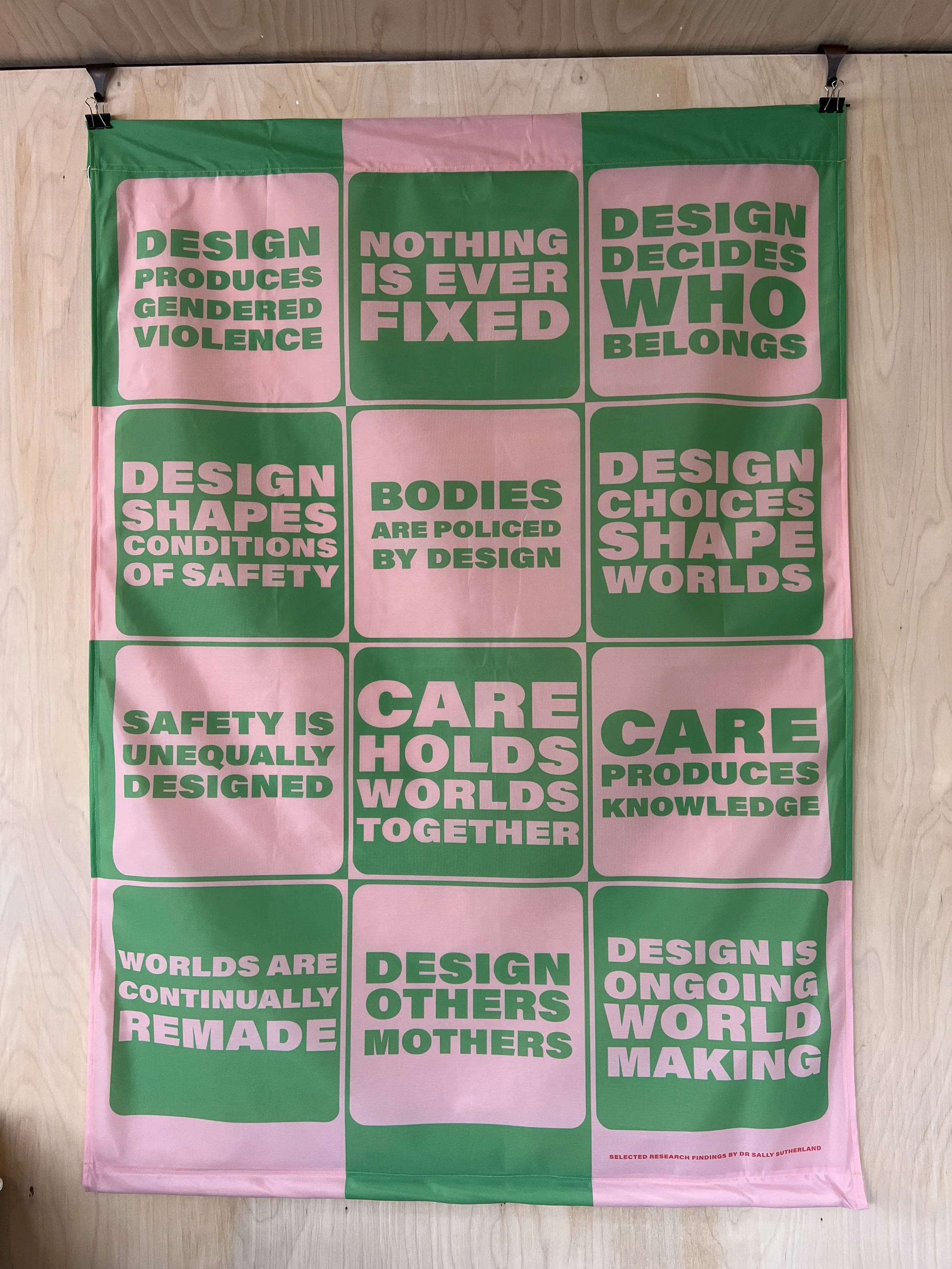
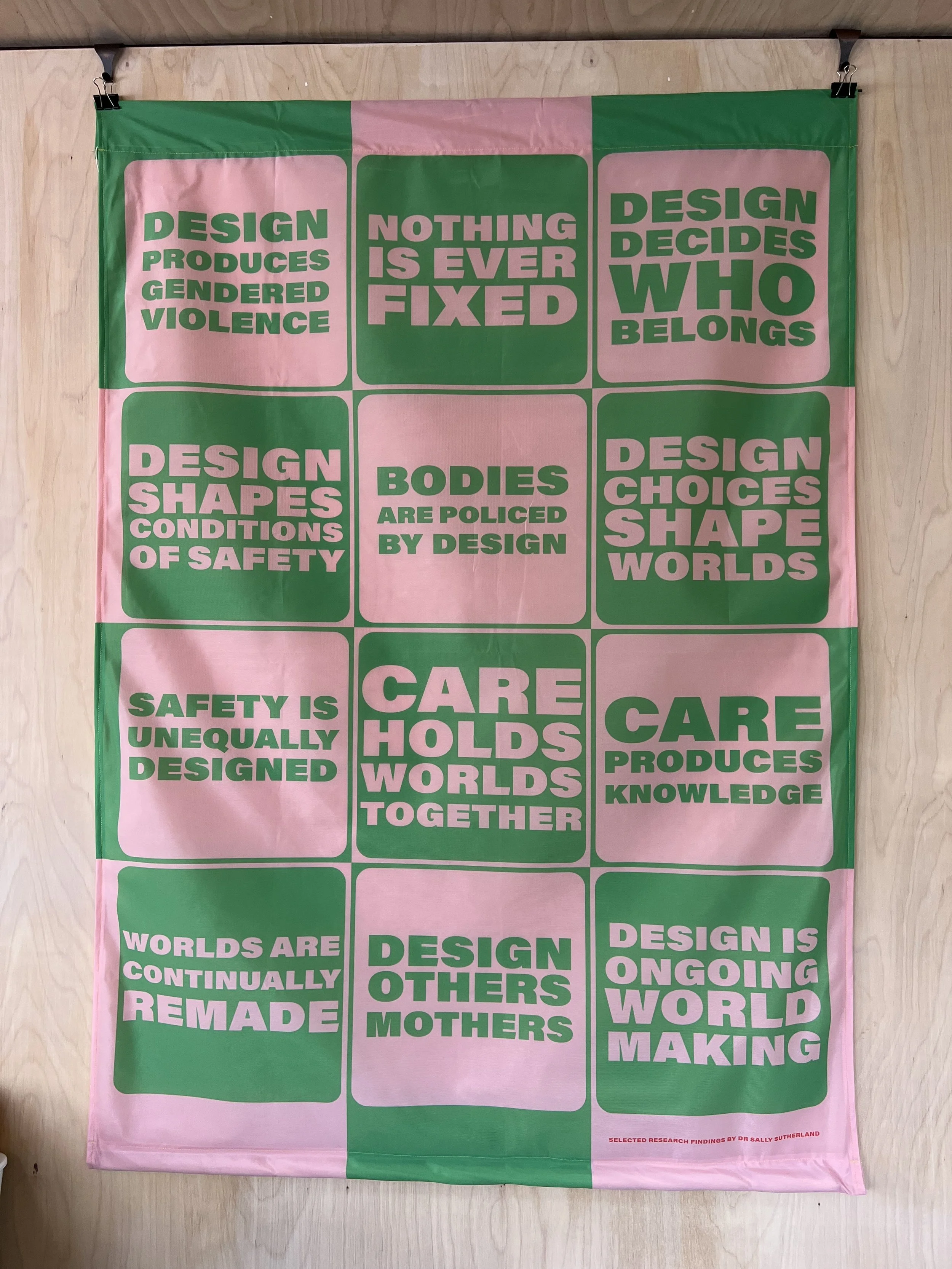
Design Produces Gendered Violence — Design Shapes Conditions of Safety
Design is not neutral. It helps produce the conditions where gendered violence happens ; through how spaces are organised, who is made visible, and who is exposed. At the same time, design shapes what safety looks like, and who that safety is designed for.
Nothing is Ever Fixed — Bodies are Policed by Design
Bodies, identities, and ways of being are always shifting. Design tries to fix them. It sets expectations about what is normal and acceptable, quietly policing how bodies move, behave, and appear in space.
Design Decides Who Belongs — Design Choices Shape Worlds
Design sets the norms. Through everyday decisions about what is included and what is left out, it determines who feels expected and who feels out of place. These choices build the worlds we live in.
Safety is Unequally Designed — Worlds are Continually Remade
Safety is structured through inequality. Some people are designed for, others are not. But these conditions are not fixed; worlds are constantly being made, which means they can be unmade and remade differently.
Design Others Mothers — Care Holds Worlds Together
Design positions mothers and care as outside the norm. When care does not align with dominant expectations, it is pushed to the margins, made invisible, or treated as inconvenient. Yet care is what holds everyday life together.
Care Produces Knowledge — Design is Ongoing World Making
Care is a way of knowing the world. It produces insight, experience, and understanding that design often overlooks. Design is not finished. It is an ongoing process of making and remaking the conditions we live within.
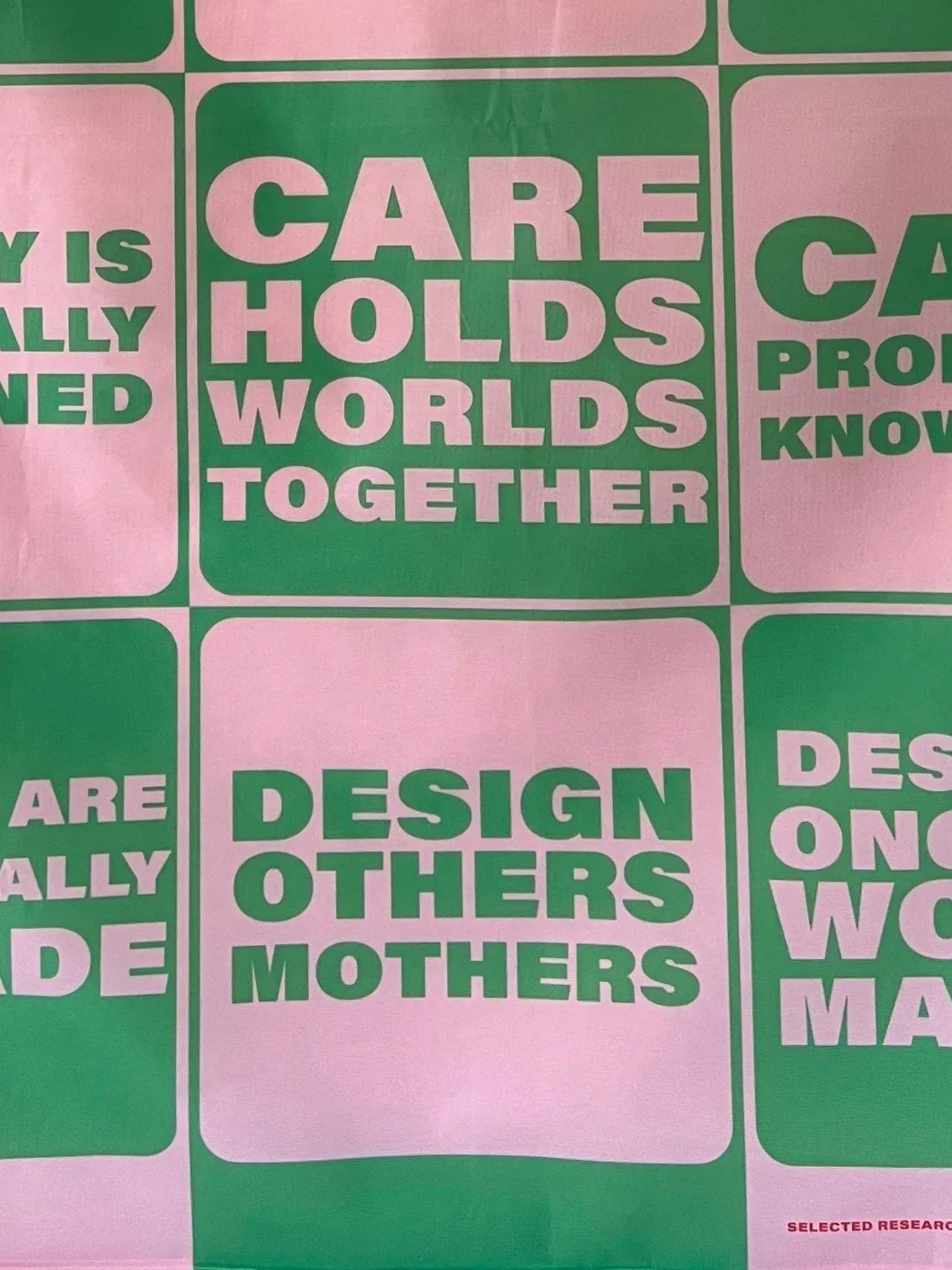
Taken together, these statements show that design is not just about making things. It is an active force in shaping social norms, power, and everyday life. It defines what is visible, what is valued, and what is pushed aside.
The flag makes these dynamics public. It brings them out of the background and into view, where they can be questioned. It also holds a tension between what is and what could be. While design produces exclusion, inequality, and harm, it is also always in motion. That means it can be undone and remade.
The flag does not resolve these contradictions. Instead, it keeps them present. It insists that care, bodies, and everyday experiences are not peripheral issues, but central to how worlds are designed.